July 16, 2016

Ruinous Coins and Sand Castles: New Jersey Copper about to be Washed Away

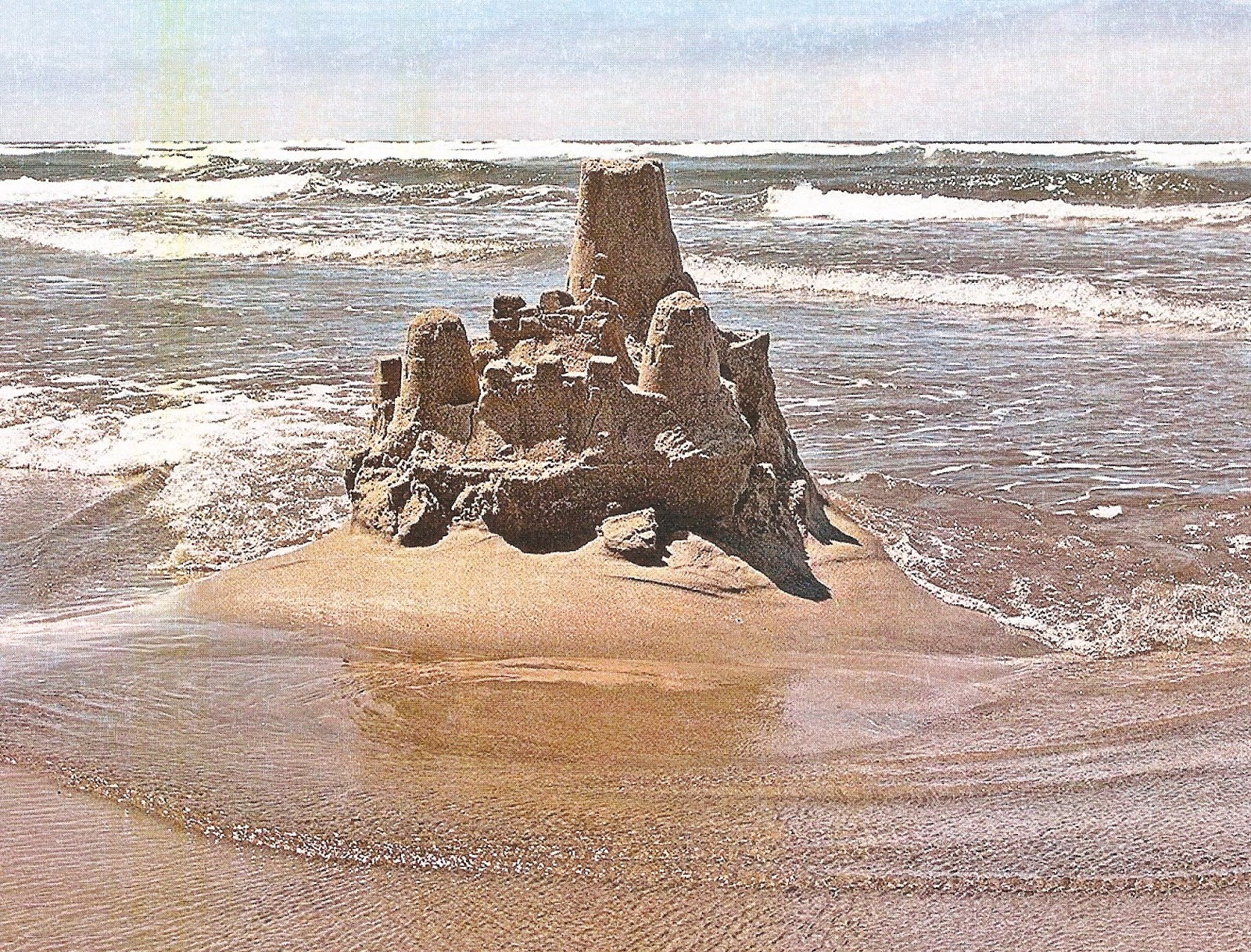
A favorite amusement is building castles on the beach.
   With plastic shovel and pail, we construct an impenetrable fortress, only to watch the ramparts crumble in the onslaught of the rising tide.
   We are mesmerized, watching until the last remnant -- just a wet mound remaining -- is washed away. Obliterated.
   This is the drama of life: The recapitulation of empire and decline, of youth and old age, of certain death to all persons and
things.

New Jersey copper about to be washed away.
We are enamored with ruins because they are like half-washed sand castles frozen in time. Ruins are brutally honest, as they announce the end of a bustling summer. No season lasts forever.
   Corroded coins are ruins.
   We like to think of them as immortal, as history in your hands -- the still point. But, they have a lifespan. And so, like our sand castles, grounders eaten away by corrosion show us the way home.
   No wonder we cannot stop looking, our fingertips rubbing away at the porous surface. It is an urgent curiosity.
   This lowly New Jersey copper evokes a wide range of emotions. I am fascinated. It scares me. It makes me think about all sorts of things. It is a piece of numismatic art.
   This is the way of the necromancer.

July 10, 2016

I go with the Nail. Coins with Authority

I have been talking with archeologists and curators lately.
   Now here are some folks that enjoy a good relic. They enjoy them even if they are scraggy. After all, many relics are found at the broad end of a shovel (a trowel, actually).
   Discovering a coin on a dig is a prize. Unlike rusty nails, coins are complete time capsules, or nearly so. Images and legends tell you where it came from. Plus, coins have dates!
   Everyone loves dates.
   Nails, on the other hand, are more enigmatic. Still, a rusted square nail is a cool find.
   For archeologists and curators, a relic coin tells a story regardless of its condition. Corrosion is expected. And, it is analyzed to see what happened while it rested in limbo.
   Of course, most of us would prefer a well-preserved coin versus one with damage (environmental or otherwise), but any coin excavated on a dig is worth a "shovels-up" celebration.
   Dug coins have authority.
   Many collectors miss this. Instead, they are concerned about authenticity -- as well they should for rare items that are counterfeited. But what I am referring to is different. Put another way, collectors like to play authenticator. For example, they purchase a large cent of a particular die-variety and then re-attribute it over and over. Taking this a step further, some collectors determine the die-state as well. All of this is great fun! It tells you about what was happening in the mint.
   But what about afterwards? What about all the other history?
   This is where relic coins come in (stage left). Their corroded surfaces announce their authority, as if to say: "I go with the nail."
   Herein lies the heart of the necromancer's approach to collecting.
   I want coins that go with the nail!

July 1, 2016

All about Coin Corrosion: Learn to Love the Unloved

Nothing is stable.
   A harsh world wears on us from the screams of birth trauma to our last fall on the front steps. What we leave behind is not permanent either. Buildings begin to fall down once the ribbon is cut, and coins begin to corrode the moment they drop from the press.

Want to know more about Coin Corrosion?  Then, this book is for you.
   Learning to love the unloved begins with understanding the electrochemical cell. Electrons dance about, to and fro, trying to find equilibrium. And, in the process, beautiful coins are produced -- painted by the unsurpassed hand of Mother Nature.
   All sorts of colorful minerals form on copper coins: cuprite, azurite, malachite, posnjakite, brochantite. They are beautiful and fascinating; they are scary too. We can see our future. Nothing is stable.

If you want a good read -- a coin book like no other -- then this is it. Treat yourself. You do not have to collect old coppers to enjoy this one.
   The book is available on Amazon and at Books123.

Embrace your inner coin chemist. Embrace the allure of relics. Embrace the kaleidoscopic art found on the surface of an old coin, once lost long ago, and now found. This book will change your perspective!

June 24, 2016

Loving the Unloved: Large Cent Pattern or Stitch Marker

Pattern or stitch marker with serrated wheel, circa 19th Century
And now for something totally different.
   I came across this tool a few months back. It is well made and still works. Or, at least I think it still works. I have not used it, so I am guessing. But then again, I am not handy with a needle and thread -- and I do not own a thimble.
   At first glance, I thought is was a crimper or pie cutter -- it is definitely not either. Too bad, I am quite adept at cutting pie, especially peach pie.
   In any case, the handle is well made, strong, and of fine oak. A big, meaty nail holds the cent in place. There is very little wobble.
   This is American ingenuity at its best. Large cents make for good sewing and baking tools if you have the vision.

   If this cent was just a serrated and holed cent, minus the rest, it would just be another odd bit that most folks would pass by. Unloved.
   But when we see it here, we can appreciate that it is special. This tool was well cared for too. It has a patina of wear to show that it had a busy life. I wonder how many trousers, shirts, or dresses were marked out by the sharp points?

Now, for those of you EACers who just have to know: I believe this is a (1)8(2)6 N3 with 6th star at coronet tip, B above I. It took some time to differentiate this one from N9. Other opinions?